

The Complete Janitorial Equipment and Supplies Checklist for Warehouses, Schools, and Hospitals
blog

The Complete Janitorial Equipment and Supplies Checklist for Warehouses, Schools, and Hospitals

09 December, 2025
The Complete Janitorial Equipment and Supplies Checklist for Warehouses, Schools, and Hospitals

Listen... I've been managing facility operations for over a decade, and if there's one thing that keeps me up at night, it's realizing we're missing critical janitorial equipment and supplies right when we need them most.

You're running a warehouse, school, or hospital—and keeping these spaces clean isn't just about appearances. It's about safety, compliance, and honestly... peace of mind. The right janitorial equipment and supplies can mean the difference between a spotless facility that runs like clockwork and a nightmare scenario where your team's scrambling to find basic cleaning tools during an inspection.

Why Having the Right Janitorial Equipment and Supplies Matters More Than You Think

Here's the reality: most facility managers I talk with underestimate just how much proper equipment impacts their bottom line. We're not just talking about mops and buckets here.

According to OSHA's provisions (1910.141), all floors must be kept dry, and refuse must be properly disposed of. Violations can cost you thousands—or worse, put your employees and visitors at risk. Air quality in warehousing environments can have airborne pollutants 100 times greater than outdoors. That's not a typo.

But beyond compliance, there's productivity. A properly equipped janitorial team can clean 3-5 times faster than traditional methods. I've seen it firsthand—facilities that invest in the right gear reduce labor costs by up to 40%.

Understanding Your Facility's Unique Cleaning Needs

Before we dive into the checklist, let's talk about what makes your space different...

Warehouses deal with heavy-duty dirt, oil spills, and massive square footage. You're looking at concrete floors that need aggressive cleaning but also quick turnaround times so operations don't stop.

Schools have constant foot traffic, tight budgets, and the challenge of cleaning during limited hours. Plus, you've got different surfaces—classrooms, cafeterias, gyms, bathrooms—all requiring specialized approaches.

Hospitals face the highest stakes. Healthcare-associated infections (HAIs) cause roughly 99,000 deaths annually in the US. Your cleaning program literally saves lives. You need hospital-grade disinfectants, specialized equipment that operates quietly during patient care hours, and rigorous protocols.

The Essential Janitorial Equipment and Supplies Checklist

Core Cleaning Chemicals (The Foundation)

Let's start with what's going into those spray bottles and buckets:

Multi-Purpose Cleaners

  • All-purpose cleaners (Lysol, Mr. Clean, Pledge)
  • Concentrate formulas for cost savings (dilute ratios typically 1:32 or 1:64)
  • EPA-registered disinfectants

Specialized Cleaners

  • Glass cleaners (ammonia-free for streak-free results)
  • Floor cleaners specific to your surface type (tile, vinyl, concrete, epoxy)
  • Bathroom cleaners with mildew fighters
  • Degreaser for kitchens and loading docks
  • Hospital-grade disinfectants (for healthcare facilities)

Safety Note: Always store chemicals in their original containers. Keep Material Safety Data Sheets (MSDS) accessible. Train staff on proper dilution—more isn't better and can actually damage surfaces.

Manual Cleaning Tools (Your Daily Warriors)

Mops and Buckets

  • Microfiber mops (trap 99% of bacteria vs. 30% for cotton)
  • Wet mop buckets with wringer systems
  • Mop heads (have backups—you'll go through these)
  • Color-coded mop systems to prevent cross-contamination

Brooms and Dustpans

  • Push brooms (24-36" for large areas)
  • Angle brooms for corners and tight spaces
  • Industrial dustpans with long handles (save those backs)

Cloths and Towels

  • Microfiber cloths (get different colors for different areas—red for bathrooms, blue for general surfaces, yellow for glass)
  • Paper towels for one-time use situations
  • Bar towels for heavy-duty cleaning

Automated Floor Cleaning Equipment (Game Changers)

This is where things get interesting. The right automated equipment transforms your cleaning operation.

For Medium to Large Facilities (15,000-50,000+ sq ft)

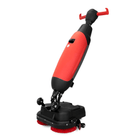
Walk-behind floor scrubbers are absolute workhorses. I'm talking about machines that scrub, clean, and dry floors in a single pass—eliminating the traditional mop-and-bucket mess that leaves floors wet for hours.

Take the SUNMAX RT50 Walk-Behind Floor Scrubber as a perfect example. This 22-inch battery-powered commercial floor scrubber is designed specifically for warehouses, schools, and hospitals—exactly the environments we're discussing.

Here's why this machine catches my attention...

The RT50 cleans up to 36,000 square feet per hour. Think about that for a second. That's what would take a team with mops all day, done in a fraction of the time. It's got a 14.5-gallon recovery tank, meaning fewer trips to dump dirty water.

Key Features That Solve Real Problems:

  • Battery-powered operation: No cords to trip over (remember those OSHA requirements?), and you can clean during business hours without disturbing operations
  • Leaves floors dry immediately: Eliminates slip-and-fall hazards—critical in all three facility types
  • Commercial-grade durability: Built to handle daily use in tough environments
  • Easy operation: Most staff can be trained in under 20 minutes

The ROI Story: Currently priced at $2,499, the RT50 costs 30-60% less than comparable name-brand machines while delivering the same cleaning power. When you factor in labor savings alone—reducing a 4-hour mopping job to 1.5 hours of scrubber operation—the machine pays for itself in 3-6 months for most facilities.

Plus, SUNMAX backs it with a 2-year warranty and stocks spare parts in US warehouses with 24-hour shipping. That's peace of mind when you're running daily operations.

Other Automated Equipment to Consider:

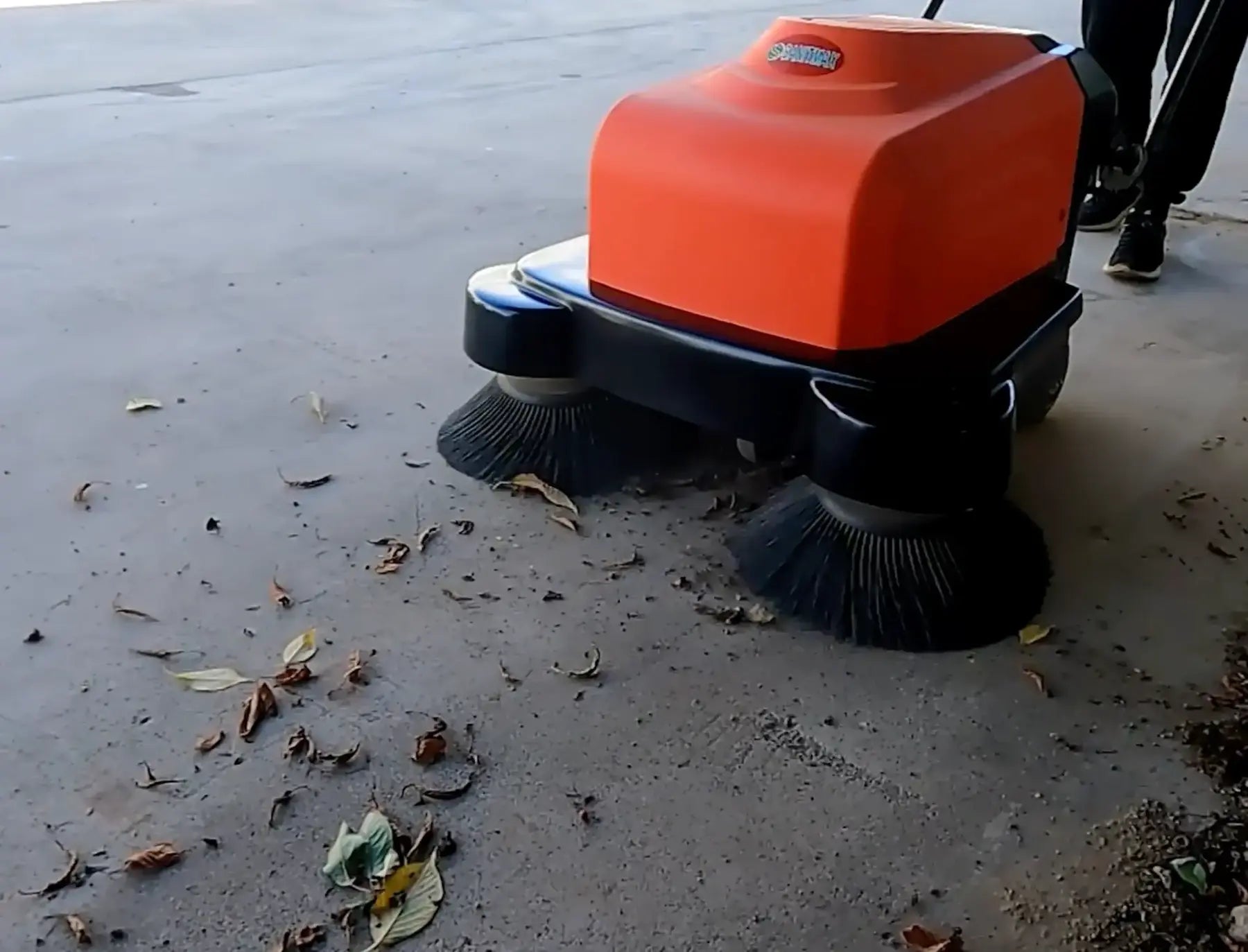
  • Floor sweepers for large debris
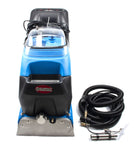
  • Carpet extractors (schools and hospitals with carpeted areas)
  • Burnishers for maintaining floor finish (retail and healthcare)
  • Self-propelled scrubbers for facilities over 50,000 sq ft
  • Ride-on scrubbers for warehouses exceeding 100,000 sq ft

Vacuum Systems

Upright Vacuums

  • HEPA filtration systems (hospitals and schools need this)
  • Commercial-grade motors (minimum 10-amp)
  • Wide cleaning paths (12-15")

Backpack Vacuums

  • Perfect for stairs, tight spaces, and quick cleanups
  • Reduce strain on operators (studies show 30% less fatigue vs. uprights)

Wet/Dry Vacuums

  • Essential for spill response
  • Minimum 12-gallon capacity for commercial use
  • Stainless steel tanks for durability

Waste Management Equipment

Trash Collection

  • Commercial trash cans (various sizes: 23-gal, 44-gal, 55-gal)
  • Heavy-duty trash bags (minimum 1.5-mil thickness)
  • Biohazard waste containers (hospitals)
  • Recycling bins with clear labeling
  • Sharps containers (healthcare facilities)

Janitorial Carts

  • Multi-shelf carts for transporting supplies
  • Enclosed carts for discretion in occupied spaces
  • Linen carts (hospitals and schools with PE programs)

Safety and PPE (Personal Protective Equipment)

This is non-negotiable. Your team's health depends on it.

Essential PPE

  • Nitrile gloves (resistant to chemicals, available in various sizes)
  • Latex gloves (for non-chemical tasks)
  • Rubber gloves (heavy-duty for harsh chemicals)
  • Safety goggles or face shields
  • Respirators or dust masks (especially for healthcare)
  • Non-slip work boots
  • Disposable gowns or aprons (hospitals)

Safety Equipment

  • Wet floor signs (multiple—you'll need them everywhere)
  • First aid kits (check monthly, restock as needed)
  • Spill kits for chemical accidents
  • Eye wash stations
  • Fire extinguishers (though usually facilities management's responsibility)

Restroom Supplies

Dispensers and Refills

  • Toilet paper dispensers and jumbo rolls
  • Paper towel dispensers (hands-free preferred)
  • Soap dispensers (foam soap reduces waste by 36%)
  • Hand sanitizer dispensers with 70%+ alcohol content
  • Air freshener systems

Cleaning Tools

  • Toilet brushes with holders
  • Specialized bathroom cleaning chemicals
  • Grout brushes
  • Squeegees for shower areas (hospitals and schools with locker rooms)

Specialized Equipment by Facility Type

Warehouse-Specific

  • Oil spill absorbent materials
  • Heavy-duty degreasers
  • Loading dock equipment (squeegees, power washers)
  • High-reach dusting tools
  • Pressure washers for outdoor areas

School-Specific

  • Gym floor cleaning equipment (never use water on hardwood)
  • Playground equipment cleaners
  • Cafeteria grease management tools
  • Chewing gum removers (trust me on this one)
  • Portable sanitizing stations

Hospital-Specific

  • EPA-registered hospital disinfectants
  • UV sanitizing equipment (emerging technology that kills 99.9% of pathogens)
  • HEPA vacuum cleaners
  • Microfiber systems (reduce pathogen spread by 95% vs. traditional methods)
  • Terminal cleaning supplies for patient discharge rooms
  • Fogging machines for large area disinfection
  • Chemical sterilants for medical equipment

Equipment Comparison: Making Smart Purchasing Decisions

When you're investing in major equipment like floor scrubbers, here's how different options stack up:

Feature Manual Mopping Battery Floor Scrubber Corded Scrubber Ride-On Scrubber
Ideal Facility Size Under 10,000 sq ft 10,000-50,000 sq ft 10,000-30,000 sq ft 50,000+ sq ft
Cleaning Speed ~2,000 sq ft/hr 30,000-40,000 sq ft/hr 25,000-35,000 sq ft/hr 50,000-75,000 sq ft/hr
Labor Requirements High (multiple staff) Medium (1-2 operators) Medium (1-2 operators) Low (1 operator)
Upfront Cost $200-500 $1,500-3,500 $1,000-2,500 $4,000-15,000
Mobility Excellent Excellent Limited (cord length) Good (large machines)
Floor Drying Time 30-60 minutes Immediate Immediate Immediate
Noise Level Low 55-65 dB 55-65 dB 60-70 dB
Best For Small spaces Warehouses, schools, hospitals Budget-conscious facilities Large warehouses

Five Proven Facility Comparisons

Let me share real scenarios I've encountered:

1. Mid-Size School District (45,000 sq ft)

  • Challenge: Limited cleaning windows (after 3 PM) with aging manual equipment
  • Solution: Invested in SUNMAX RT50 floor scrubber + upgraded microfiber systems
  • Result: Reduced cleaning time from 5 hours to 2 hours, cut chemical use by 40%, improved floor appearance
  • ROI: 4 months

2. Distribution Warehouse (120,000 sq ft)

  • Challenge: Concrete floors with heavy forklift traffic, oil stains, and dust
  • Solution: Ride-on floor scrubber + industrial sweeper + daily spot-cleaning program
  • Result: Passed safety inspections with zero violations, reduced slip-and-fall incidents by 90%
  • ROI: 6 months

3. Community Hospital (65,000 sq ft)

  • Challenge: 24/7 operations requiring quiet, efficient cleaning with hospital-grade disinfection
  • Solution: Battery-powered walk-behind scrubbers (57 dB operation) + UV sanitizing equipment + color-coded microfiber program
  • Result: Improved HCAHPS cleanliness scores from 78% to 94%, reduced HAI rates
  • ROI: 8 months (including reputational benefits)

4. Private School (28,000 sq ft)

  • Challenge: Limited budget, multiple surface types (tile, carpet, hardwood gym floor)
  • Solution: One versatile walk-behind scrubber + carpet extractor + specialized gym equipment
  • Result: Extended floor finish lifespan by 3 years, improved parent satisfaction surveys
  • ROI: 7 months

5. Cold Storage Facility (85,000 sq ft)

  • Challenge: Freezing temperatures, ice buildup, food safety requirements
  • Result: Specialized scrubber with heated solution tanks + anti-freeze cleaning solutions + daily ice removal program
  • Result: Met FDA inspection requirements, eliminated temperature-related equipment failures
  • ROI: 5 months

Budget Planning: What Should You Actually Spend?

This is where facility managers often get sticker shock. Let me break down realistic budgets:

Small Facility (Under 20,000 sq ft)

  • Initial equipment investment: $3,000-5,000
  • Annual supplies: $2,000-3,500
  • Equipment replacement cycle: 5-7 years
  • Monthly operating cost: ~$200-300

Medium Facility (20,000-75,000 sq ft)

  • Initial equipment investment: $8,000-15,000
  • Annual supplies: $5,000-10,000
  • Equipment replacement cycle: 5-7 years
  • Monthly operating cost: ~$500-900

Large Facility (75,000+ sq ft)

  • Initial equipment investment: $20,000-50,000
  • Annual supplies: $12,000-25,000
  • Equipment replacement cycle: 5-10 years
  • Monthly operating cost: ~$1,200-2,500

Pro Tip: Factor in training costs (often overlooked). Budget $500-1,000 annually for proper staff training on equipment use, chemical safety, and cleaning protocols.

Maintenance and Inventory Management (The Secret to Success)

Here's something nobody talks about enough... buying the equipment is only half the battle.

Daily Maintenance Checklist

  • Empty recovery tanks on floor scrubbers (bacteria grows fast in dirty water)
  • Rinse squeegees and brushes
  • Check battery levels
  • Wipe down equipment exteriors
  • Report any unusual sounds or performance issues

Weekly Tasks

  • Deep clean recovery tanks with disinfectant
  • Inspect pads and brushes for wear
  • Check fluid levels
  • Review inventory levels
  • Conduct spot checks on cleanliness standards

Monthly Requirements

  • Lubricate moving parts
  • Replace worn brushes or pads
  • Conduct equipment performance audits
  • Review chemical usage patterns
  • Update inventory orders

Quarterly Reviews

  • Professional equipment servicing
  • Staff retraining sessions
  • Budget reviews and adjustments
  • Evaluate new cleaning technologies

Inventory Management System Use the "Par Level" method: Establish minimum quantities for each supply item based on usage rates. When you hit the par level, trigger an automatic reorder. This prevents those "Oh no, we're out of toilet paper!" emergencies.

For example:

  • Toilet paper: Par level = 2 weeks' supply
  • Floor cleaner concentrate: Par level = 1 month's supply
  • Mop heads: Par level = 6 units (2 weeks of replacements)

Software Solutions: Consider inventory management apps like Sortly or Asset Panda. They'll track usage patterns and predict when you'll need reorders. Some facilities I've worked with reduced supply costs by 15-20% just by eliminating emergency orders and taking advantage of bulk pricing.

Common Mistakes to Avoid (Learn from My Failures)

I'll be honest... I've made every mistake in the book. Here's what NOT to do:

1. Buying Cheap Equipment That $800 floor scrubber from an unknown brand? It'll break in 6 months, and you'll have zero support. Spend more upfront for quality. Brands like SUNMAX offer factory-direct pricing with solid warranties—that's the sweet spot.

2. Ignoring Training Your $3,000 floor scrubber becomes a $3,000 paperweight if nobody knows how to use it properly. I once watched a staff member try to use a walk-behind scrubber while pushing it backwards. It was... painful to watch.

3. Over-Ordering Specialty Chemicals That hospital-grade disinfectant has a shelf life. Buying a year's supply might seem economical, but if it expires, you've wasted money. Stick to 2-3 months max for specialized chemicals.

4. Neglecting Maintenance Equipment that's maintained runs 50-70% longer than neglected equipment. Schedule it. Put it in your calendar. Make someone responsible.

5. Forgetting About Ergonomics Your janitorial staff are human beings. Back injuries from poor equipment choices cost facilities an average of $70,000 per incident in workers' comp claims. Invest in lightweight, ergonomic tools.

Frequently Asked Questions

Q: How often should I replace mop heads and cleaning pads?

A: Mop heads should be replaced every 15-30 uses or when they start to smell (even after washing). Floor scrubber pads typically last 20-40 hours of use depending on floor conditions. If you're seeing decreased cleaning performance, it's time to replace.

Q: What's the difference between a floor scrubber and a floor sweeper?

A: Floor sweepers collect dry debris (dust, dirt, small objects) using brushes and vacuum systems. Floor scrubbers use water and cleaning solution to scrub and remove stuck-on grime, then vacuum up the dirty water. Large facilities often need both—sweep first, then scrub.

Q: Can I use household cleaning products in commercial settings?

A: Technically yes, but it's not recommended. Commercial products are concentrated (more cost-effective), formulated for heavy-duty use, and meet specific EPA and OSHA standards. Plus, many have kill-time data for specific pathogens—critical for hospitals and schools.

Q: How do I calculate the ROI on automated cleaning equipment?

A: Compare your current labor costs for manual cleaning versus operating costs with automation. Formula: (Labor Hours Saved × Hourly Wage) - (Equipment Cost ÷ Expected Lifespan in Months) = Monthly Savings. Most quality floor scrubbers show positive ROI in 3-12 months.

Q: What certifications should I look for when purchasing janitorial supplies?

A: Look for EPA registration numbers on disinfectants, Green Seal certification for eco-friendly products, and OSHA compliance for safety equipment. For healthcare, seek products on the CDC's list of EPA-registered disinfectants.

Q: Should I rent or buy floor cleaning equipment?

A: If you're cleaning less than 10 hours per week, renting might make sense (though expensive long-term). For daily use, buying is more cost-effective. Calculate: Monthly rental cost × 12 months typically exceeds purchase price within 1-2 years.

Q: How much cleaning solution should I use per gallon of water?

A: Follow manufacturer instructions exactly—it's usually 1-4 ounces per gallon. More doesn't mean cleaner; it just leaves residue and wastes money. A 32:1 dilution ratio means 1 ounce of concentrate per 32 ounces (1 quart) of water, which is 4 ounces per gallon.

Q: What's the best way to clean different floor types?

A:

  • Concrete: Heavy-duty scrubbing, higher chemical concentration
  • Tile/VCT: Standard scrubbing with neutral pH cleaners
  • Sealed hardwood: Minimal water, specialized wood floor cleaner
  • Carpet: Regular vacuuming + quarterly extraction
  • Epoxy: Soft brushes, avoid harsh chemicals that damage sealant

Q: How do I handle complaints about chemical odors?

A: Switch to low-odor or fragrance-free products. Many facilities are moving toward green cleaning programs using plant-based cleaners. Also, ensure proper ventilation during cleaning and consider cleaning during off-hours.

Q: What should I do if equipment breaks down during a critical cleaning period?

A: Have backup equipment for critical tools (at minimum, manual mops and buckets). Establish relationships with equipment rental companies for emergency situations. Keep a maintenance fund equal to 10-15% of equipment value for unexpected repairs.

Taking Action: Your 30-Day Implementation Plan

Alright, we've covered a lot. Here's how to actually implement this without overwhelming your team:

Week 1: Assessment

  • Audit current equipment and supplies
  • Identify gaps in your inventory
  • Measure your facility square footage by floor type
  • Document current cleaning times and processes

Week 2: Planning

  • Calculate budget based on facility size
  • Research equipment options (start with floor scrubbers if applicable)
  • Get quotes from 3-5 suppliers
  • Create preliminary purchasing list

Week 3: Procurement

  • Make purchasing decisions
  • Order long-lead items first (floor scrubbers typically ship in 3-7 days)
  • Set up vendor accounts for regular supplies
  • Schedule equipment delivery and training

Week 4: Training and Implementation

  • Conduct equipment training sessions
  • Update cleaning protocols
  • Implement inventory management system
  • Gather staff feedback and adjust

The Bottom Line

Here's what I wish someone had told me when I started...

The right janitorial equipment and supplies aren't an expense—they're an investment. An investment in safety, efficiency, productivity, and honestly, your sanity.

You wouldn't ask your warehouse team to move pallets without forklifts. You wouldn't expect your office staff to work without computers. So why are we still expecting janitorial teams to clean massive facilities with 1950s-era mops and buckets?

Start with the basics we've covered here. Focus on quality over quantity. And remember—the most expensive equipment is the stuff that doesn't get used because it's too complicated or doesn't fit your needs.

For most facilities managing 15,000+ square feet, a quality walk-behind floor scrubber like the SUNMAX RT50 is the single best investment you can make. It'll pay for itself faster than almost any other equipment purchase while dramatically improving cleanliness standards.

The facilities that thrive aren't the ones with the biggest budgets—they're the ones with the right tools, proper training, and a commitment to continuous improvement.

Your facility deserves better than "good enough" cleaning. Your staff deserves tools that make their jobs easier, not harder. And you deserve to sleep at night knowing your facility is clean, safe, and compliant.

Start building your janitorial equipment and supplies checklist today. Future you will thank present you.


Ready to upgrade your facility's cleaning operations? Check out SUNMAX's complete line of commercial floor scrubbers at sunmaxus.com. Factory-direct pricing, 2-year warranty, and US-based support that actually answers the phone.

What's the biggest cleaning challenge you're facing in your facility? Drop a comment below—I'd love to hear your story and help troubleshoot.

Deja un comentario

All comments are moderated before being published.

Ten en cuenta que los comentarios deben aprobarse antes de que se publiquen.